The Tuas Megaport Project
A generational infrastructure project designed to consolidate Singapore's container operations into a single, fully automated maritime facility.
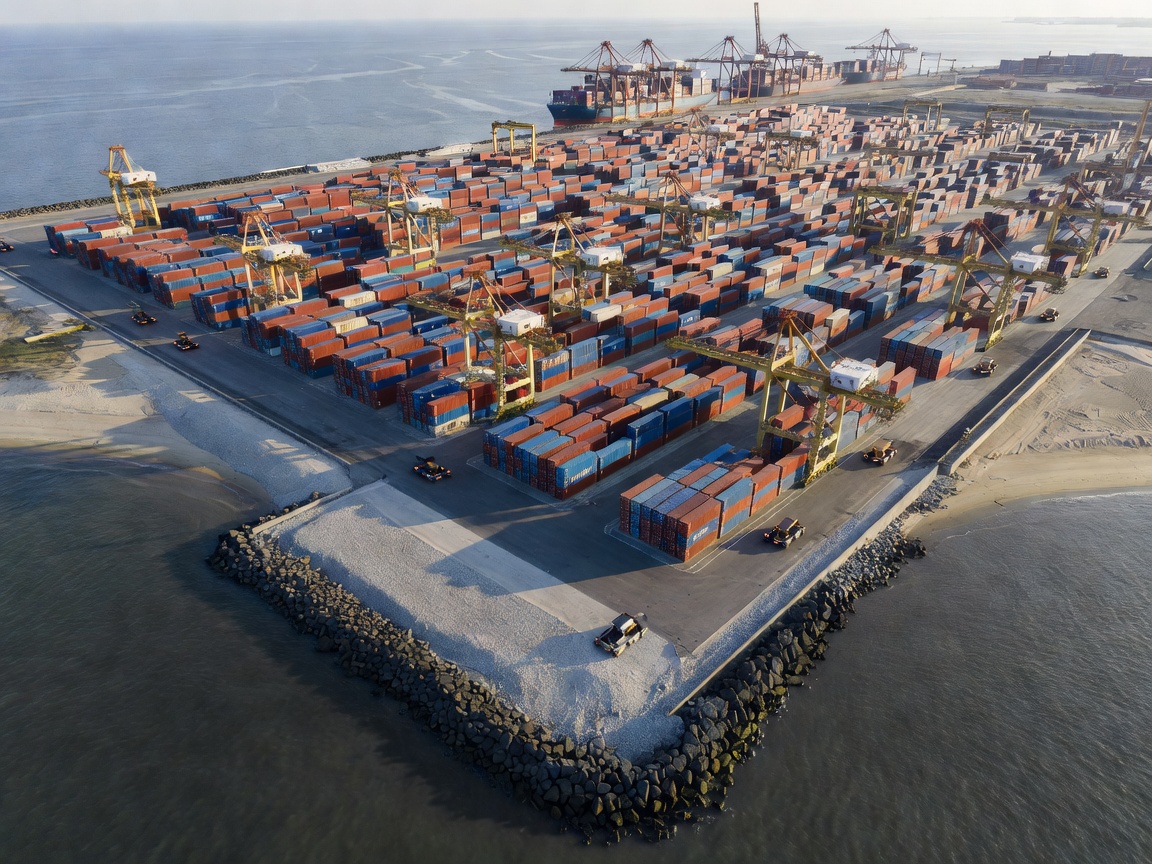
The Consolidation Strategy
Historically, Singapore's port operations were spread across several distinct terminal locations: Tanjong Pagar, Keppel, Brani, and Pasir Panjang. While effective, managing inter-terminal transfers (moving containers via trucks on public roads between different port facilities) introduced inefficiencies, emissions, and logistical complexities.
The Tuas Megaport represents a radical shift in strategy. It is designed to consolidate all existing container terminal operations into one contiguous mega-facility at the western end of the island. By bringing all berths and yards into a single location, the need for inter-terminal trucking is entirely eliminated. This consolidation drastically improves economies of scale, optimizes land use by freeing up prime waterfront real estate in the city center for residential and commercial redevelopment, and streamlines transshipment operations for global shipping alliances.
Phased Construction and Land Reclamation
The scale of the Tuas project necessitates a multi-decade construction timeline, executed in four distinct phases. Because Singapore is land-scarce, the vast majority of the Tuas port footprint is being built on reclaimed land.
| Development Phase | Status / Target | Engineering Focus |
|---|---|---|
| Phase 1 | Operational (Opened 2021) | Reclamation involving massive caissons; establishment of initial deep-water berths. |
| Phase 2 | Under Construction | Use of excavated earth from other national projects for sustainable reclamation. |
| Phases 3 & 4 | Planning / Future | Full build-out pushing capacity to the targeted 65 million TEU mark. |
The engineering involved in the reclamation is notable. Instead of relying solely on imported sand, the project utilizes mixed materials, including excavated earth from deep tunneling projects (like the MRT expansions) and dredged materials from the seabed. The perimeter of the reclaimed land is secured using massive concrete caissons—hollow structures prefabricated on land, floated out to sea, and sunk into position to form the seawall, a method faster and more durable than traditional piling.
Total Automation and Autonomous Vehicles
Tuas is designed from the ground up to be a highly automated port. This is not merely about replacing manual labor, but achieving a consistency, safety record, and 24/7 operational tempo that manual operations cannot match.
The cornerstone of this automation is the fleet of Automated Guided Vehicles (AGVs). Unlike standard terminal tractors driven by humans, AGVs are unmanned, electrically powered flatbed vehicles that move containers between the quay cranes (at the ship) and the automated yard cranes. They navigate using a complex grid of transponders embedded in the port surface and are managed by a centralized fleet management system that uses advanced algorithms to route them efficiently, avoiding traffic jams and deadlocks.
Coupled with remote-controlled quay cranes and fully automated yard cranes, the container handling process at Tuas minimizes human presence on the ground, transitioning port workers into high-tech control room roles managing systems rather than operating heavy machinery directly.
Sustainability by Design
As a greenfield project, Tuas incorporates sustainability measures that are difficult to retrofit into older ports. The entire fleet of AGVs operates on electricity, eliminating diesel emissions in the terminal. The port layout includes smart grid management to optimize energy usage, and facilities are designed to be "super low energy" buildings, maximizing natural ventilation and utilizing extensive solar panel installations.
Furthermore, Tuas is preparing for the future of maritime fuel. It is being equipped to handle alternative marine fuels, supporting the industry's shift away from heavy fuel oil toward LNG, methanol, and potentially ammonia, cementing its role as a forward-looking hub in global maritime trade.