Pasir Panjang Terminal Operations
The current operational workhorse of Singapore's container trade, featuring advanced automation and deep-water berths designed for mega-vessels.
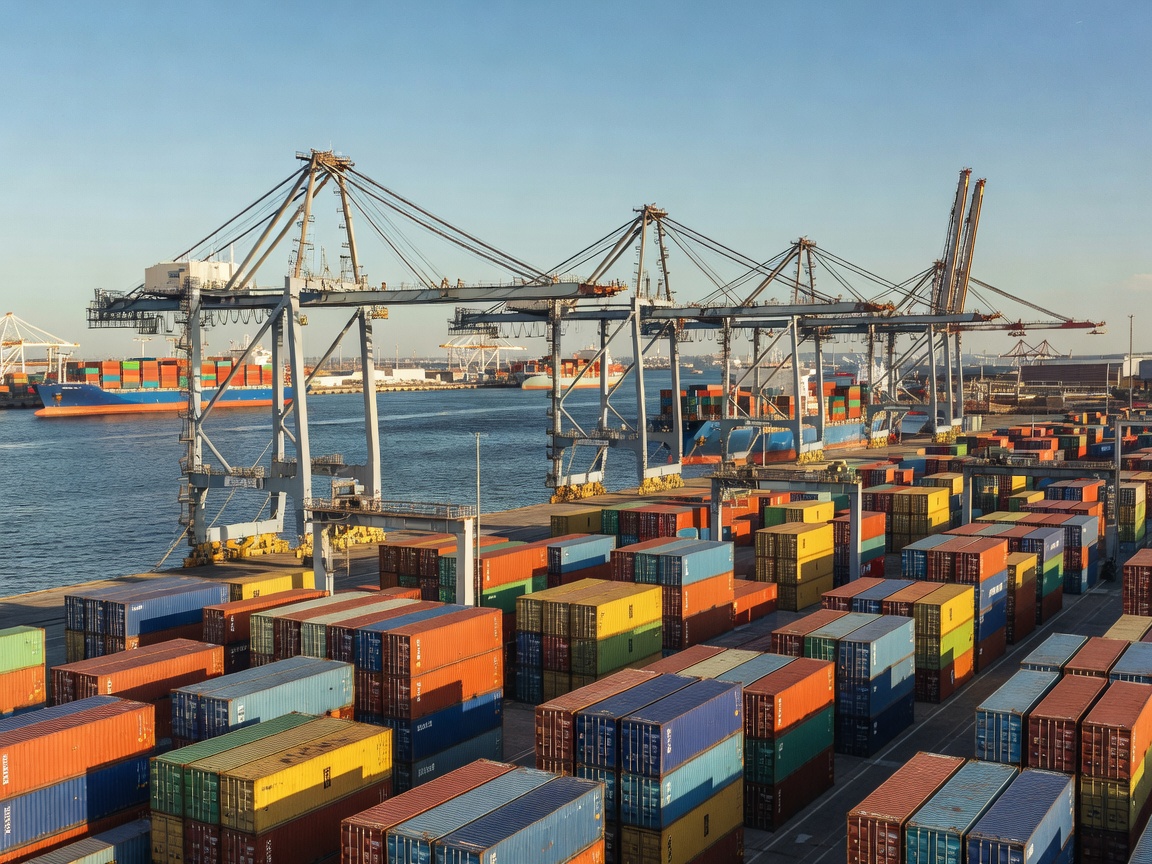
Evolution and Phased Expansion
Before the Tuas Megaport project dominated headlines, Pasir Panjang Terminal (PPT) represented the pinnacle of Singapore's port engineering. Developed in multiple phases, PPT was necessary to accommodate the rapid growth in global container volumes and the increasing size of container vessels, which older city terminals like Tanjong Pagar and Keppel could not handle efficiently.
Phases 1 and 2 established the groundwork with deep-water berths, while Phases 3 and 4 introduced significant technological leaps. The expansion into Phases 3 and 4 alone added 15 deep-water berths, pushing the total capacity of the Pasir Panjang complex to accommodate approximately 50 million Twenty-foot Equivalent Units (TEUs) annually. This expansion was critical in maintaining Singapore's status as a premier transshipment hub during the 2010s and early 2020s.
Infrastructure and Specifications
The defining characteristic of Pasir Panjang is its physical capability to handle the world's largest container ships (ULCS - Ultra Large Container Ships). The infrastructure specifications are designed to minimize vessel turnaround time, a critical metric in transshipment operations.
| Specification Category | Details |
|---|---|
| Max Draft Capability | Up to 16.0 meters, allowing fully laden mega-vessels to dock regardless of tide conditions. |
| Crane Reach | Quay cranes capable of reaching across 24 rows of containers, standard for modern ULCS. |
| Total Berths | Over 37 deep-water berths across all phases. |
| Yard Equipment | Extensive use of Automated Rail Mounted Gantry (aRMG) cranes. |
Technological Integration: The Zero-Emission Yard Concept
Pasir Panjang serves as the testing ground and initial implementation site for many technologies that will eventually define the Tuas Megaport. The most prominent of these is the transition to an automated, zero-emission container yard.
In the newer phases of PPT, traditional diesel-powered Rubber Tyred Gantry (RTG) cranes have been largely superseded by Automated Rail Mounted Gantry (aRMG) cranes. These aRMGs run on electricity, significantly reducing the carbon footprint of terminal operations. Furthermore, they are operated remotely from a centralized control center. A single operator can monitor and control multiple cranes simultaneously, aided by advanced camera systems and sensor arrays. This not only improves efficiency but drastically increases safety by removing personnel from the active container yard.
The Transshipment Model
Unlike gateway ports (such as Los Angeles or Rotterdam) where the majority of cargo is imported into the hinterland, Pasir Panjang operates primarily on a "hub and spoke" transshipment model. Approximately 80% of the containers handled at PPT do not enter Singapore's domestic market.
Instead, large mainline vessels drop off massive quantities of containers originating from various global manufacturing hubs. These containers are temporarily stacked in the yard before being loaded onto smaller feeder vessels bound for regional ports in Southeast Asia, Australasia, or the Indian subcontinent—or vice versa. The efficiency of PPT is measured by how quickly and accurately it can execute these complex transfers, requiring sophisticated Terminal Operating Systems (TOS) to manage the logistics puzzle.
Transition to Tuas
While Pasir Panjang remains a state-of-the-art facility, the long-term master plan for Maritime Singapore involves the eventual consolidation of all container operations at the Tuas Megaport. The leases for the city terminals have already expired, and their operations have been relocated to Pasir Panjang.
However, PPT will not close in the near term. It will continue to operate concurrently with the early phases of Tuas, providing necessary capacity buffer. Only when Tuas reaches its later phases of completion (projected into the 2040s) will the operations at Pasir Panjang be fully wound down, at which point the prime waterfront land will likely be redeveloped for other strategic national uses. Until then, PPT remains the vital, beating heart of Singapore's maritime trade.