Jurong Port: Beyond Containers
While mega-terminals handle the world's boxes, Jurong Port serves as Singapore's primary gateway for bulk, breakbulk, and industrial cargo, fueling the domestic economy.
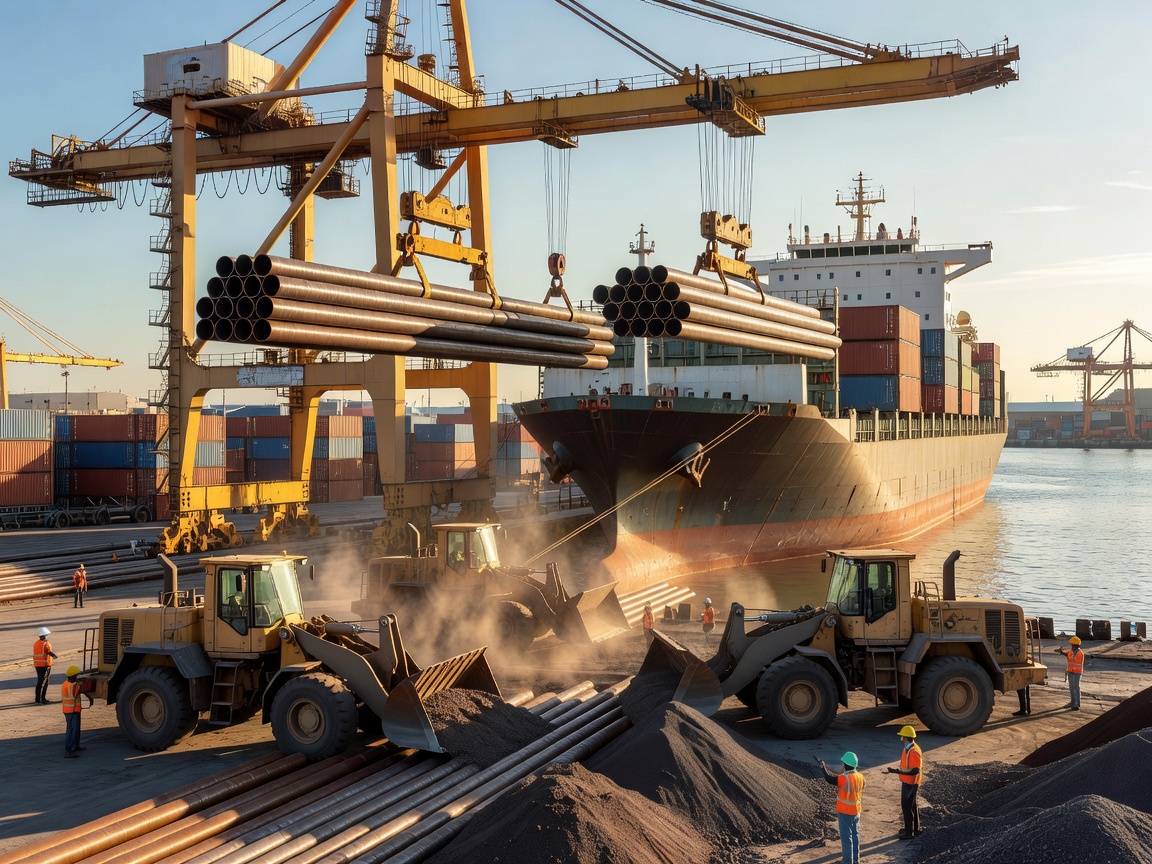
The Distinction: Containers vs. Bulk
When discussing the Port of Singapore, the conversation heavily skews toward containerized trade managed by PSA International. However, a significant portion of global trade cannot fit inside a standard 20-foot or 40-foot box. This is where Jurong Port operates, holding the mandate as Singapore's premier multi-purpose port.
Jurong Port specializes in handling non-containerized cargo. This includes bulk cargo (materials transported unpackaged in large quantities like cement, copper slag, or sugar) and breakbulk cargo (goods that must be loaded individually, such as steel plates, construction equipment, wind turbine blades, and heavy machinery). Without Jurong Port, Singapore's construction, manufacturing, and offshore marine sectors would lack the raw materials necessary to function.
Key Terminals and specialized Infrastructure
Handling bulk and breakbulk requires vastly different infrastructure than container terminals. Instead of standardized quay cranes, Jurong Port relies on heavy-lift cranes, continuous ship unloaders, and specialized storage facilities.
| Facility Segment | Primary Function |
|---|---|
| Cement Terminal | Equipped with dedicated continuous ship unloaders connected via enclosed conveyor belts to massive storage silos, minimizing dust pollution while discharging cement clinker. |
| Steel Terminal | Features reinforced heavy-duty yards designed to bear the extreme point-loads of stacked steel plates, coils, and structural beams required for shipbuilding and construction. |
| Offshore Marine Centre | A specialized waterfront facility supporting the oil, gas, and offshore wind industries, providing heavy-load staging areas for fabricating and loading massive offshore modules. |
Lighterage and Coastal Shipping
Jurong Port is also the nerve center for Singapore's lighterage industry. Lighters are small barges that transport supplies, spare parts, provisions, and crew to larger vessels anchored in Singapore's anchorages (ships that do not berth at a terminal but wait offshore). Jurong Port operates dedicated lighter terminals at Penjuru and Marina South, serving as the logistical springboard for the hundreds of vessels waiting in the strait on any given day. This marine supply chain is vital to Singapore's status as a comprehensive maritime hub, not just a cargo transit point.
Transition to a Next-Generation Port
Like its container counterparts, Jurong Port is undergoing a transition toward automation and sustainability, aiming to become a "Next Generation Multipurpose Port." Handling bulk goods is traditionally labor-intensive and environmentally challenging (due to dust and spillage).
To address this, Jurong Port has invested heavily in enclosed conveyor systems for dry bulk, reducing environmental impact. Furthermore, they are a pioneer in solar energy adoption. In a landmark project, Jurong Port installed one of the world's largest port-based solar power generation facilities on the roofs of its warehouses, generating enough clean energy to offset a significant portion of its operational energy demands.
As global supply chains diversify and regional manufacturing grows, the demand for specialized project cargo and raw materials remains robust. Jurong Port's continuous adaptation ensures that while the containers go to Tuas, the heavy lifting that builds cities and industries continues uninterrupted in Jurong.